How to Make Wood Pellets at Home for a Pellet Stove
You can make your own wood pellets at home with a small flat die pellet mill, dry sawdust and a few hours of work. The process has four steps: grind the wood, dry it, press it into pellets and let them cool. This guide explains each step, what equipment you need, and how to get pellets that burn cleanly in a pellet stove.
Is it worth making your own pellets?
Making pellets makes sense if you have a steady supply of clean wood waste: sawdust from a woodshop, shavings from a sawmill, or trimmings from your own land. If you have to buy all your raw material, store-bought pellets are usually simpler.
Home pelleting also gives you control over what you burn. You know exactly which wood went in, with no fillers or treated lumber.
What you need
Equipment | What it does |
|---|---|
Hammer mill or wood crusher | Breaks chips and shavings into fine particles |
Moisture meter | Checks that the material is dry enough |
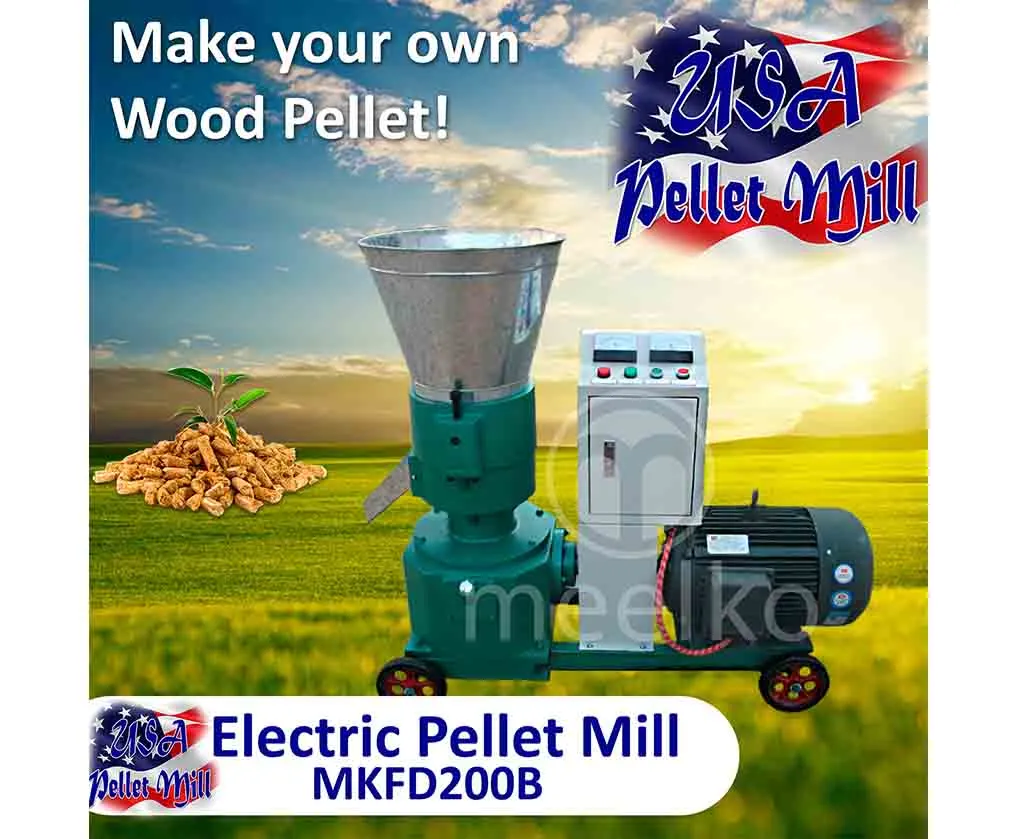
Flat die pellet mill | Presses the material into pellets |
Screen and cooling tray | Separates fines and lets pellets harden |
Dry storage bags or bins | Keeps finished pellets away from moisture |
For home and small-farm use, an electric flat die pellet mill between 5 and 15 kW is the usual choice. If you own a tractor, a PTO-driven mill avoids the need for three-phase power.
Step 1: Choose clean wood
Use untreated wood only. Sawdust, shavings and chips from pine, oak, maple and most other species all work. Softwoods tend to bind more easily because of their natural lignin and resin. Never use painted, stained, pressure-treated or glued wood such as plywood or MDF. They release harmful fumes when burned and can damage your stove.
Step 2: Grind to a fine particle size
A pellet mill needs small, uniform particles. Run chips and shavings through a hammer mill until most particles are smaller than the pellet diameter, roughly 3 to 5 mm. Fine sawdust from a woodshop can often go straight to the mill.
Step 3: Dry the material
Moisture is the most important factor in pellet quality. For wood, aim for a raw material moisture of about 10 to 15% before pelleting. Too wet, and pellets come out soft and crumbly. Too dry, and the material will not bind and the die can overheat. A simple moisture meter takes the guesswork out of this step.
Step 4: Press the pellets
Start the mill and feed material slowly. A new die needs a break-in period: run a mix of fine sawdust and a little vegetable oil through it until the die channels are polished and pellets come out smooth. Then feed your dry sawdust at a steady rate.
For pellet stoves, use a 6 mm die. Residential stoves in the United States are designed for pellets about 1/4 inch in diameter.
Step 5: Cool, screen and store
Fresh pellets come out hot and slightly soft. Spread them on a tray or screen and let them cool for at least 30 minutes before bagging. Cooling hardens them and reduces dust. Screen out the fines and run them through the mill again. Store pellets in sealed bags or bins in a dry place, because they absorb moisture from the air.
How to tell if your pellets are good
They are hard and glossy, and do not crumble when you squeeze them.
They produce little dust in the bag.
They burn with a steady flame and leave little ash.
The pellet industry standard in the United States calls for finished pellets with low moisture and low ash. Home-made pellets from clean sawdust can reach that quality with good drying and cooling.
Which pellet mill should you choose?
Your situation | Recommended mill |
|---|---|
Small woodshop, single-phase power | Small electric flat die mill |
Farm with three-phase power | Electric flat die mill of 7.5 to 15 kW |
Farm with a tractor | PTO flat die pellet mill |
No grid power | Diesel flat die pellet mill |
See all our flat die pellet mills, in stock in Opa-locka, Florida.
Frequently asked questions
Can I make pellets from leaves or grass for my stove?
It is possible, but they produce more ash than wood. Most stove makers recommend wood pellets.
How many pounds of pellets can a small mill make per hour?
Small electric flat die mills typically make between 100 and 500 lbs per hour of wood pellets, depending on the material and its moisture.
Do I need a binder?
Not for most wood. The natural lignin in wood holds the pellets together when the moisture and particle size are right.
Is it safe?
Wood dust is flammable. Keep the area clean, ground your equipment, and follow the safety instructions in your machine's manual.


