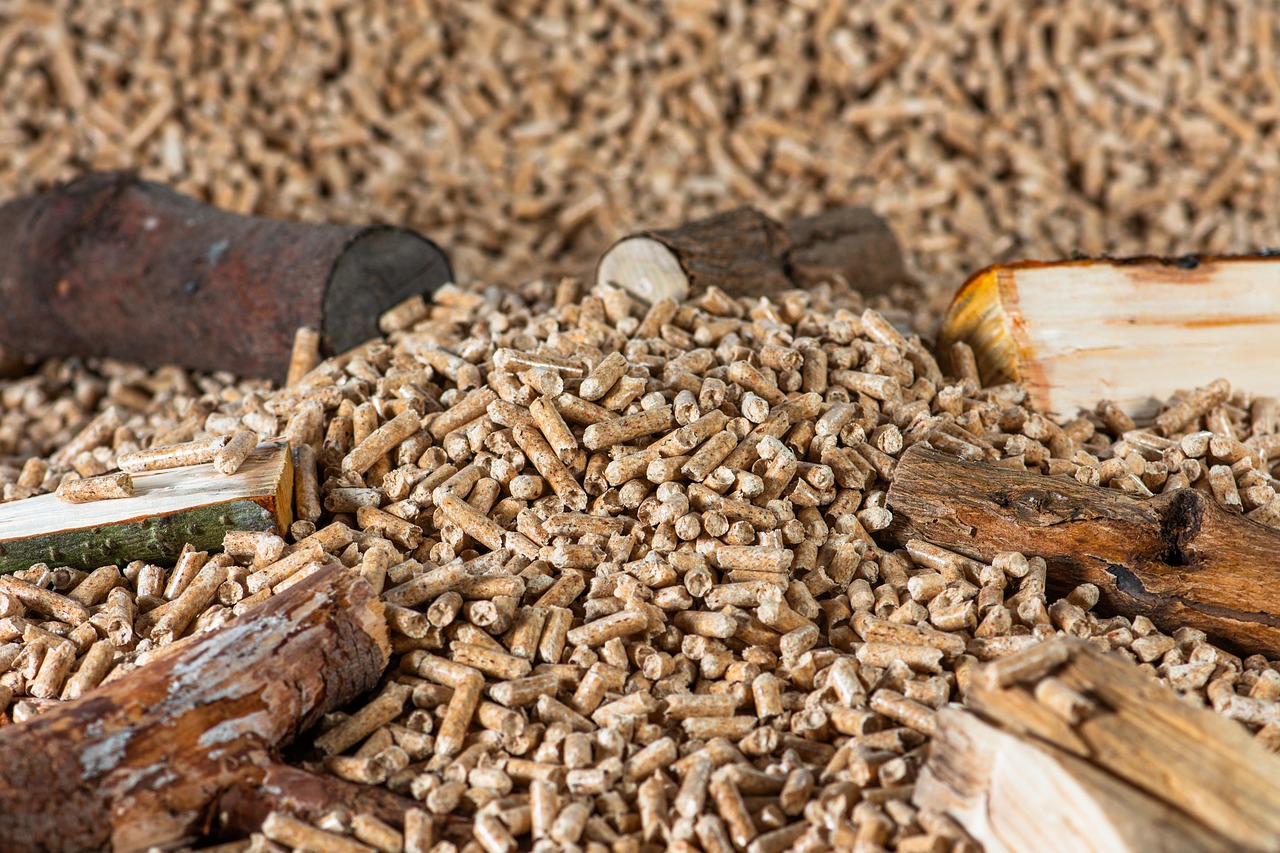
Biomass Pellet Machine Guide: Materials, Models and Prices
A biomass pellet machine presses ground plant material, such as sawdust, wood chips, straw or husks, into dense pellets for fuel, bedding or soil use. The right machine depends on three things: the material you have, how wet it is, and how many pounds per hour you need. Most small and mid-size producers use a flat die pellet mill, a rotating roller mill for fibrous or hard-to-bind material, or a ring die mill for continuous production. In every case you also need a way to grind the material, and often a way to dry it.
Step 1: Know your material
Material | How hard to pellet | What to know |
|---|---|---|
Sawdust and shavings | Easiest | Usually dry and fine already. Check moisture and remove any metal |
Wood chips and branches | Medium | Crush, dry and grind first. Fresh chips can be around 50% moisture |
Straw, hay and grass | Harder | Light and fibrous. Grind fine and feed slowly. See our alfalfa and hay pellet guide |
Peanut shells and sunflower husks | Harder | They bind poorly and give little traction. A rotating roller model works better |
Leaves and yard waste | Harder | High ash limits where the pellets can burn. See our leaf pellet guide |
Painted or treated wood, plywood, pallets | No | Toxic when burned, and prohibited in residential wood heaters |
Clean material makes better pellets and wears the die less. Bark, soil and leaves all raise ash, and ash decides who will buy your pellets.
Step 2: Prepare it
Moisture. Aim for roughly 10 to 15% before pressing. Our MKRD250C-W ring die mill, for example, specifies raw material moisture of up to 13%. Wet material makes soft pellets, and very dry material can block the die. Industrial plants dry chips from about 50% down to about 12%, and drying is often the most expensive step. For small volumes, air drying under a roof works if you turn the pile and check it with a moisture meter.
Size. Branches and logs go through a wood crusher first. Then a hammer mill grinds the material finer than the die holes. A 1/4 inch (6 mm) screen is a common starting point for a 6 mm die.
Our guide on turning wood chips and yard waste into pellets covers sorting, drying and grinding in more detail.
Step 3: Choose the type of mill
Mill type | Best for | Model codes |
|---|---|---|
Standard flat die | Small to medium volumes of sawdust, chips and mixed biomass | B and C electric, P for tractor PTO |
Rotating roller flat die | Straw, husks and other material that binds poorly | RB |
Ring die | Continuous production, many hours a day | MKRD |
In a standard flat die mill, the rollers are turned by the die and the material. In a rotating roller mill, the rollers are driven and press harder, which helps with material that gives little traction. Read what the model letters mean. Our diesel and gasoline models, letter A, are sold outside the U.S. and Canada only.
Step 4: Compare models
Wood outputs from each product page, at November 2026 prices. Real output varies with the material and its moisture, and most biomass runs slower than feed.
Model | Type | Power | Wood output | Price |
|---|---|---|---|---|
Flat die, PTO | Tractor | Up to 265 lb/hr | $3,042 | |
Flat die | 11 kW | Up to 440 lb/hr | $4,457 | |
Flat die | 15 kW | Up to 660 lb/hr | $6,134 | |
Flat die | 22 kW | Up to 880 lb/hr | $7,045 | |
Flat die | 30 kW | Up to 1,100 lb/hr | $14,403.63 | |
Rotating roller | 15 kW | Up to 485 lb/hr | $4,976 | |
Rotating roller | 30 kW | Up to 880 lb/hr | $11,689 | |
Ring die | 22 kW | 220 to 660 lb/hr | $19,654 | |
Ring die | 90 kW | 2,200 to 4,400 lb/hr | $71,447 |
See all models in our flat die, rotating roller and ring die collections. Domestic shipping starts at $399.
Step 5: Plan the rest of the line
Step | Machine | Example |
|---|---|---|
Crushing branches and logs | Wood crusher | MK-FSD600, 15 kW, $10,940 |
Fine grinding | Hammer mill | |
Drying wet material | Rotary or belt dryer | Needed when the material is well above 15% moisture |
Cooling | Contraflow cooler | MK-COL70, $7,145 |
Screening | Pellet screen | Returns fines to the press |
For a full commercial plant, see our step-by-step guide on how to build a wood pellet plant.
Where biomass pellets can be used
Use | What to know |
|---|---|
Residential pellet stoves | EPA-certified heaters are limited to pellets graded by a third-party program, which in practice means clean wood pellets |
Commercial and industrial boilers | Match the boiler's ash and moisture limits and your air permit |
Animal bedding | Absorbent pellets from clean wood or straw |
Soil amendment or mulch | A use for material with more bark or leaves. State rules apply if you sell it |
Ash is the number most buyers ask about. PFI premium wood pellets allow no more than 1% ash. Send a sample to a lab before you promise a grade to anyone.
Frequently asked questions
What is the best material for biomass pellets? Clean, dry sawdust or shavings. They need little preparation and make low-ash pellets.
Do I need a dryer? Only if your material is well above 15% moisture. Sawdust from dry lumber often needs none. Fresh chips almost always do.
Can the same machine make feed and biomass pellets? Yes, flat die mills press both, with a thorough cleanout between jobs. Never run manure or fertilizer through a mill you use for feed.
How much does a biomass pellet machine cost? The models in the table above run from $3,042 for the MKFD200P PTO mill to $71,447 for the MKRD420C-W ring die mill, before the grinder, cooler and shipping.
Which mill for straw or husks? A rotating roller model, such as the MKFD200RB or MKFD300RB, presses harder and handles material that binds poorly.
Watch it done
Get help choosing
Tell us your material, its moisture, the tons per year you plan to make and the power you have, and we will help you size the mill and the machines around it. See what to prepare for a quote.


